What Is the Most Important Element or Principle of Art?
15 Essentials for Every Fine art Form
What if y'all had the keys to the creative kingdom? With each of these essentials for making art, that is exactly what y'all have. Understanding and applying the edifice blocks of art (or the elements and principles of fine art, as they are oftentimes chosen) is what takes an artist from beginner to master.
In gild to understand, deftly critique, and practise your chosen art course, yous need to know the key concepts that information technology is congenital upon. Familiarity with elements of art like color and line and principles of fine art (proportion, rhythm, and contrast amid others) is what gives artists that fluency. With your knowledge of these, yous will always exist able to detect the joy and excitement that can surround art…and for art lovers there is aught more than appealing than that.
Elements of Fine art
Retrieve of the elements of fine art every bit the arrows in your quiver or tools in a toolbox. You apply them individually and in combination for any art making endeavour. For the visual arts, these are visual elements: color, grade, line, shape, space, texture, and value.
Color
A three-pronged element of fine art: hue, value and intensity.
Hue is the colour itself.
Value is the hue's lightness or darkness and changes when white or black is added to it.
Intensity is the aspect of brightness and purity of a color. High intensity colors are bold and bright. Depression intensity colors are faint and duller.
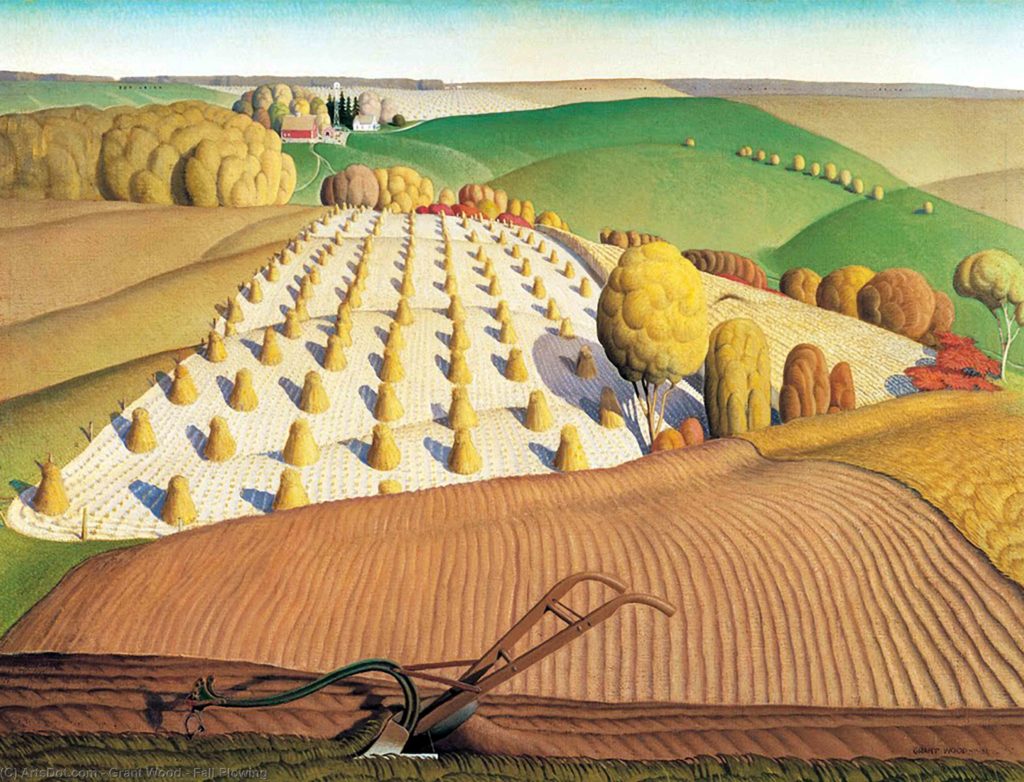
Autumn Plowing by Grant Wood
Grade
For painters and draftsmen, form is the element of art that renders a three-dimensional form in two dimensions. In a lot of ways it is the middle of an fine art object — the course itself. It tin enclose a volume and includes height, width and depth. A cube, a sphere, a cylinder and a pyramid are all unlike forms. Forms can besides be formless — abstracted and free-flowing.
Line
Marks made on a surface are known as line. They start at a point and movement along, creating space as they become. Lines tin can be two- or three-dimensional, describing form or the form itself, implied, or abstract. Creating a series of parallel lines to indicate grade is a technique known ashatching.Crosshatching indicates more one set of these lines laid overtop of each other at angles to model and bespeak tone.
Shape
The chemical element of art that is 2-dimensional, apartment, or limited to elevation and width. Usually a shape is enclosed.
Space
Infinite is the element of fine art through which both positive and negative areas are defined or a sense of depth is achieved in a work of art.
Texture
Texture defines the mode an fine art object or an chemical element in a composition feels or looks as if it would feel if touched.
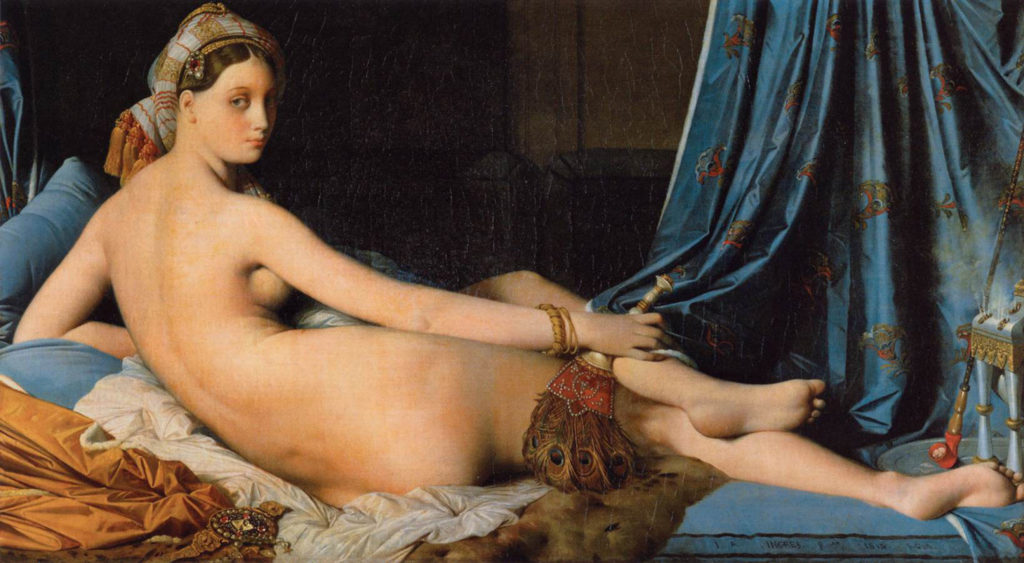
G Odalisque past Jean Auguste Dominique Ingres
Principles of Art
If the elements of fine art are your tools, the principles of art arehow you put them to work. It is where the style of art manipulates its substance. Rhythm, harmony, remainder, contrast, movement, proportion, and variety are the principles of fine art.
Rhythm
This principle of fine art describes the movement in or of an artwork. Rhythm is created by the variety and repetition of elements in a piece of work of art that come together to create a visual tempo or beat.
Harmony
This is achieved when the elements of an artwork come together in a unified mode. Sure element are repeated yet still look and feel similar. Non monotony and not anarchy, harmony is that perfectly honed combination of both.
Balance
Artists combine elements to add a feeling of equilibrium or stability to a work of fine art. Symmetry and disproportion are manifestations of balance.
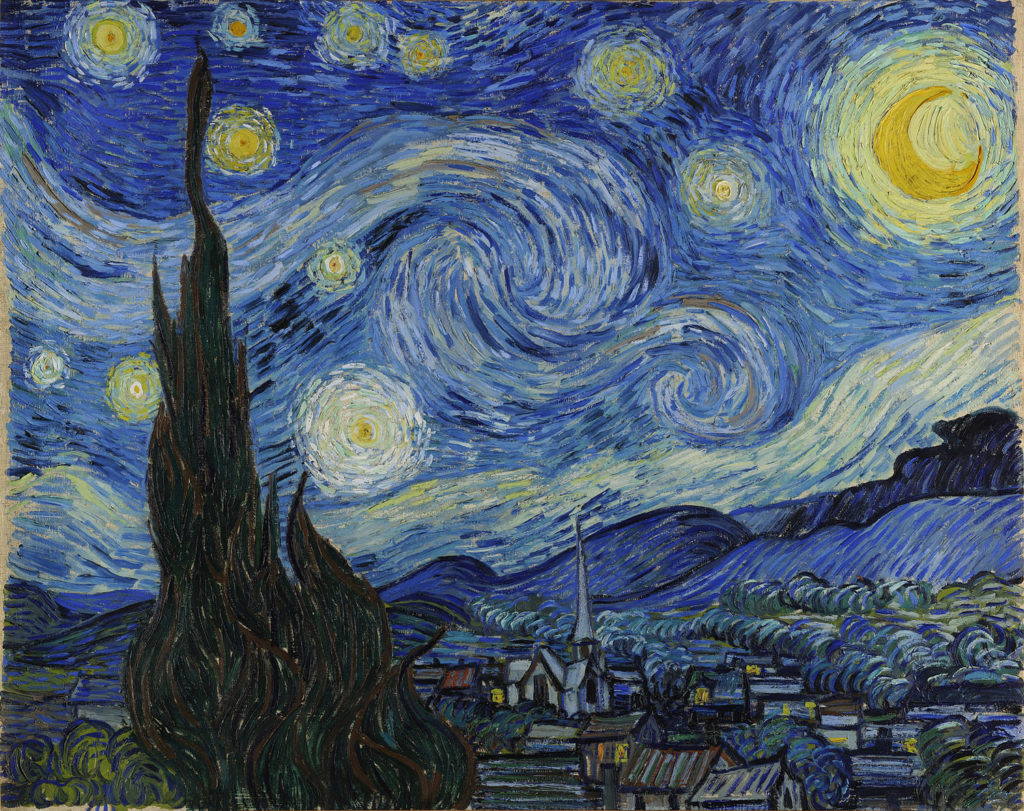
Starry Dark by Vincent van Gogh
Dissimilarity
Areas of dissimilarity are where a viewer'due south eye are usually kickoff drawn. Artists will combine elements to stress the differences betwixt those elements.
Move
Move is used to create the look and feeling of activity in an artwork. Information technology guides the viewer'south eye throughout a piece. A sense of movement can be varied lines, repetition of elements, and gestural mark-making among many more than.
Design
This is the compatible repetition of an element of art or combination of elements. Anything can be turned into a pattern through repetition.
Proportion
Within the realm of the elements and principles of art, proportion is the relationship of elements in an artwork to the whole and to one another.
Variety
The principle of art concerned with diversity or contrast is that of variety. Variety is brought about past using unlike colors, sizes and shapes in a work of art. Information technology is the partner of unity. Artists seek the remainder between the two.
More Elements and Principles of Art
If this guide has been a refresher in the very all-time of ways, then yous know you are fix for the next step of your fine art journey. Put the elements and principles of art into do in your next artwork. Make it your best—and something you are proud of.
Interested in painting? Cheque out this video with Nancy Reyner, where she walks through a process of self-critique and comeback.
Source: https://www.artistsnetwork.com/art-techniques/composition/15-elements-and-principles-of-art/
0 Response to "What Is the Most Important Element or Principle of Art?"
Post a Comment